
The Double Shield in Mediation:
Confidentiality, Privilege, and Protecting Children in South African Family Mediation
When families enter mediation, they often carry fear alongside conflict.
Fear that private conversations will later be used against them. Fear that honesty may create legal consequences. Fear that vulnerability could become ammunition in court. Fear that speaking openly may worsen an already painful situation.
This is why mediation relies on two powerful protections:
- confidentiality
- privilege
Together, these protections create a safe and structured environment where families can negotiate openly, honestly, and constructively.
But there is one principle stronger than both.
The protection of a child.
At Just Mediate, confidentiality and privilege are treated with the seriousness they deserve — while always recognising that a child’s safety, dignity, and wellbeing remain the highest priority under South African law.

Understanding the Difference Between Confidentiality and Privilege
Many people believe confidentiality and privilege mean the same thing.
They do not.
Although they work together during mediation, they serve different legal and ethical purposes.
Confidentiality: Protecting the Mediation Process
Confidentiality is the mediator’s duty to keep discussions private.
This protection allows parents to:
- speak honestly
- express concerns safely
- discuss sensitive issues openly
- negotiate without fear of public exposure
- reduce hostility and emotional escalation
Confidentiality protects the integrity of the mediation process itself.
It creates emotional safety and encourages constructive communication.
Without confidentiality, many parents would never feel secure enough to engage meaningfully in mediation.
At Just Mediate, confidentiality forms part of a professional, ethically grounded process designed to protect the dignity and privacy of everyone involved.
Privilege: Protecting Negotiations From Court Use
Privilege is different.
Privilege protects mediation discussions from being used as evidence in court.
This protection is rooted in South Africa’s “without prejudice” principle and is reinforced through Rule 41A of the Uniform Rules of Court.
Privilege protects:
- settlement offers
- draft agreements
- concessions
- apologies
- private caucus discussions
- proposed compromises
This legal protection allows parties to negotiate freely without fearing that every statement may later appear before a judge.
The Constitutional Court has repeatedly confirmed the importance of without prejudice privilege because it encourages settlement and reduces unnecessary litigation.
In practical terms, privilege creates the freedom needed for honest problem-solving.
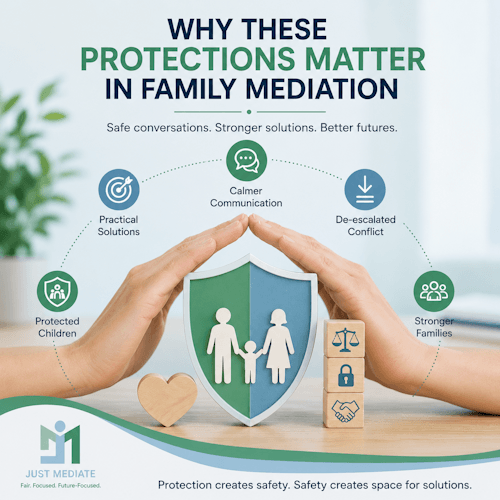
Why These Protections Matter in Family Mediation
Family mediation often involves:
- emotional conflict
- communication breakdowns
- parenting disputes
- financial stress
- unresolved trauma
- fear and uncertainty
Without legal and ethical protections, mediation could quickly become unsafe and ineffective.
Confidentiality and privilege help create a structured environment where:
- parents can communicate more calmly
- practical solutions become possible
- conflict can de-escalate
- children are protected from unnecessary hostility
- families can move toward resolution instead of prolonged litigation
This is particularly important in parenting plan mediation and high-conflict family matters.

The Limits of Confidentiality and Privilege
Although these protections are powerful, neither is absolute.
South African law places children in a specially protected legal category.
Section 28(2) of the Constitution states:
“A child’s best interests are of paramount importance in every matter concerning the child.”
This means:
- confidentiality cannot conceal child abuse
- privilege cannot prevent mandatory reporting
- mediation cannot override child protection laws
- agreements that compromise a child’s safety will not stand
When a child is at risk, the law requires action.

When Mediators Are Legally Required to Report Harm
Under Section 110 of the Children’s Act, mediators have a mandatory duty to report suspected child abuse, neglect, or harm.
Importantly, the law does not require absolute proof.
It requires reasonable grounds to believe a child may be at risk.
This obligation overrides both confidentiality and privilege.
At Just Mediate, child protection is treated as non-negotiable.
If concerns regarding abuse, neglect, coercion, or danger arise during mediation, the appropriate legal and protective steps must be taken immediately.
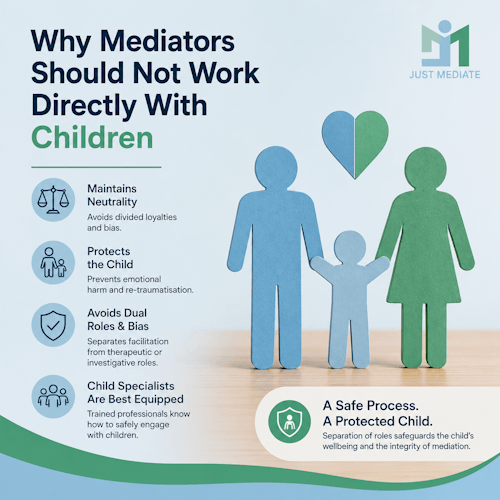
Why Mediators Should Not Work Directly With Children
One of the most misunderstood areas in family mediation is the role of children within the process.
A mediator working with parents should not simultaneously act as the child’s counsellor, therapist, or evaluator.
This separation is essential for:
- neutrality
- fairness
- emotional safety
- ethical compliance
- protecting the child’s wellbeing
South African mediation ethics require mediators to avoid dual roles that could compromise the integrity of the process.
At Just Mediate, a child specialist model is used where necessary.
This means:
- the mediator works with the parents
- a trained child specialist works with the child
- the child’s voice is heard safely and appropriately
- neutrality is preserved
- the child’s emotional wellbeing remains protected
This approach ensures that mediation remains both constitutionally aligned and child-centred.
Why Families Choose Just Mediate
A Safe and Structured Mediation Environment
Families need a process that reduces conflict instead of escalating it.
Just Mediate provides:
- professionally guided mediation
- respectful communication structures
- neutral facilitation
- child-focused solutions
- legally aligned processes
Strong Ethical and Legal Compliance
The mediation process follows strict legal and ethical standards regarding:
- confidentiality
- privilege
- mandatory reporting
- child protection
- procedural fairness
- parenting plan mediation
Experience With High-Conflict Family Dynamics
Many families enter mediation emotionally overwhelmed.
The process is designed to manage:
- escalating conflict
- emotional flooding
- communication breakdowns
- power imbalances
- parenting disputes
- separation-related stress
Child-Centred Mediation Principles
At every stage, the focus remains on:
- protecting children
- reducing emotional harm
- creating stability
- encouraging healthy co-parenting
- supporting long-term family wellbeing
Mediation Works Best When Families Feel Safe
Confidentiality protects the process. Privilege protects the negotiation. But protecting children remains the highest responsibility of all.
When mediation is handled professionally, families gain more than legal compliance.
They gain:
- structure
- clarity
- emotional safety
- healthier communication
- practical solutions
- a calmer path forward
At Just Mediate, mediation is approached with dignity, professionalism, and a deep commitment to protecting both families and children throughout the process.
Contact Just Mediate
If you need assistance with:
- parenting plans
- family mediation
- high-conflict co-parenting matters
- court-annexed mediation
- child-focused dispute resolution
Just Mediate provides a neutral, structured, and professionally guided mediation process designed to support families while protecting the best interests of children.
Book an Appointment
Kindly supply the information below. We will respond as soon as possible.